


Why Same Day Event Photography Matters for Corporate Events and Brand Communications

Corporate events are often the result of months of planning. From choosing the venue and organising speakers to preparing presentations, coordinating guests and managing the event schedule, a considerable amount of work goes into making everything run smoothly.
Yet once the event begins, everything happens remarkably quickly.
A keynote presentation might last just 30 minutes. An important announcement could take place in a matter of seconds. Guests may only be together for a few hours before returning to their offices or travelling home.
As a professional event photographer, my job is to capture those moments. But increasingly, capturing the photographs is only part of what clients need.
Businesses often want to use their event photographs while the event is still happening, whether that means sharing images on social media, supplying photographs to their communications team or displaying highlights on screens for attendees.
This is where same day event photography can make a real difference.
Having professional images available within hours, or sometimes during the event itself, gives businesses the opportunity to communicate while the occasion is still relevant and the audience is actively engaged.
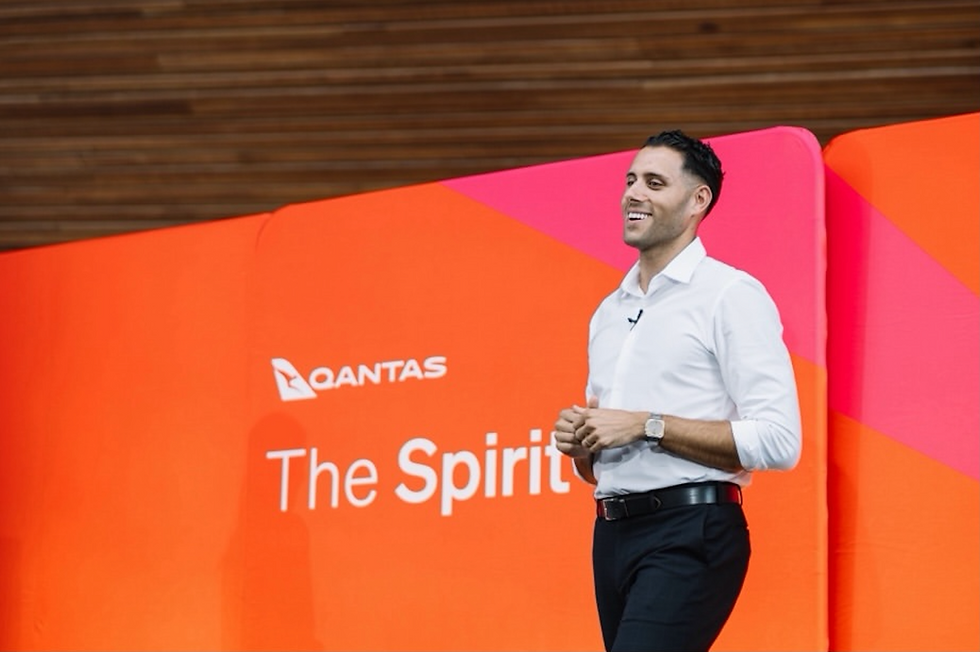
Having recently photographed Qantas The Spirit Event at The Ark in London, where I was shooting and editing on location throughout the day, I thought it would be useful to explain why fast photography delivery is becoming such an important consideration for corporate events.
What Is Same Day Event Photography?
Same day event photography involves capturing, selecting, editing and delivering professional photographs on the day an event takes place.
Traditionally, an event photographer might photograph a conference, corporate function or product launch and deliver the finished images several days later.
That approach still works perfectly well for many events, particularly when the photographs are intended for long term marketing, internal archives or future promotional materials.
However, some events benefit from having a selection of photographs available much sooner.
For example, a corporate communications team might need images of a keynote speaker immediately after their presentation. A marketing team might want to publish photographs during a product launch. Event organisers may want to show a selection of highlights on screens before the day has finished.
Same day delivery makes these things possible without having to rely entirely on mobile phone photographs or wait until the event is over.
Importantly, fast delivery should not mean compromising on image quality. The photographs still need to be professionally captured, carefully selected and edited to a standard that reflects the business and its brand.
1. Corporate Events Generate Interest in the Moment
One of the biggest advantages of same day event photography is the opportunity to share content while people are already talking about the event.
During a major conference, company announcement or product launch, attendees may be posting updates, sharing their experiences and engaging with the organisers online.
That creates a valuable window for corporate communications.
Professional photographs can help a business contribute to those conversations with high quality imagery that accurately represents the occasion.
Rather than publishing an update several days later, the communications team can share photographs while the event is still fresh in people's minds.
This is particularly useful for:
Corporate conferences and keynote presentations
Product launches and brand announcements
Press events and media briefings
Awards ceremonies and company celebrations
Aviation and industry events
Corporate hospitality and networking events
Each type of event has different priorities, but they all benefit from being able to communicate at the right moment.
2. Behind the Scenes at Qantas The Spirit Event in London
A recent example of this was my work photographing Qantas The Spirit Event at The Ark in London.
It was great to be back working with the Qantas team again, and this particular event required a slightly different approach to the photography.
Alongside capturing the speakers, presentations, guests and atmosphere throughout the day, I was also editing photographs on location.
During the first break, I needed to select and prepare a collection of images quickly so they could be loaded into a slideshow.
When attendees returned to the main stage room, those photographs were displayed on the event screens.
This meant that images captured earlier in the day were already becoming part of the event experience.
It is something I particularly enjoy about this type of assignment. There is a real satisfaction in seeing photographs being used almost immediately, especially when they are helping tell the story of an event that is still taking place.
Of course, achieving that turnaround requires planning.
I needed to balance photographing the event with selecting images, editing them and making sure everything was ready within a relatively short window.
There is not much room for delay when a presentation schedule is already running.
It is a good example of why event photography is not always simply about turning up with a camera and delivering a gallery afterwards.
Sometimes the photography itself becomes part of the event production.
3. Supporting PR and Media Communications
For businesses hosting press events, industry announcements or major corporate presentations, the timing of image delivery can be particularly important.
Journalists, publications and communications teams often work to tight deadlines.
If a company makes an important announcement in the morning, its PR team may want to distribute photographs alongside a press release that afternoon.
Professional images can help communicate the announcement visually, whether they show a senior executive speaking, a new product being introduced or an important moment from the event.
This is especially relevant when the event involves senior leadership, industry representatives or high profile brand activity.
A photograph of the right moment can give a press release far more context than a generic image from the company's existing library.
However, fast delivery also requires a clear understanding of which photographs are needed.
Before an event, I find it useful to know whether the client requires images of particular speakers, branded presentations, announcements or guests.
That allows me to prioritise the photographs that will be most useful to the communications team.
4. Keeping Social Media Content Relevant
Social media has changed how businesses communicate around events.
Rather than waiting until everything is finished, many organisations now share updates throughout the day.
A conference might begin with a photograph of the venue and registration area, followed by a keynote speaker, networking activity and highlights from later sessions.
Same day event photography provides a collection of professional images that can support this activity.
For corporate brands, consistency matters.
Photographs published on LinkedIn, Instagram, Facebook or other channels should reflect the quality and professionalism of the organisation.
Good composition, accurate colours, recognisable branding and natural photographs of people all contribute to that impression.
While mobile phone images can be useful for spontaneous updates, professionally captured photographs provide greater flexibility for important announcements and planned communications.
They can also be reused later in company newsletters, presentations, websites and other marketing materials.
The result is content that works both immediately and over a longer period.
5. Using Event Photography During Live Presentations
One of the more interesting uses of same day event photography is incorporating images directly into an event's presentation or production.
This was particularly relevant during the Qantas event.
Photographs taken earlier in the day were prepared for a slideshow that attendees could see when they returned from their break.
It creates a different experience from simply receiving a gallery after the event.
Guests can see moments they have just experienced, including presentations, conversations and activities from earlier sessions.
For event organisers, this can help reinforce the atmosphere and give the audience another way to engage with the occasion.
Similar approaches can work for awards ceremonies, company celebrations, conferences and corporate hospitality events.
A slideshow might include highlights from the morning, photographs of attendees or moments that connect different parts of the event programme.
Naturally, this requires coordination between the photographer, event organisers and technical production team.
The format, image dimensions, delivery method and deadlines should all be agreed in advance.
6. Same Day Photography Requires More Than Fast Editing
When people think about same day photography, they often focus on how quickly the photographs can be edited.
Editing speed is important, but it is only one part of the process.
A photographer also needs to work efficiently while capturing the event.
That means understanding the schedule, anticipating important moments and knowing which photographs should take priority.
For example, if the client needs images of a keynote speaker within 20 minutes of their presentation, I need to make sure I have captured suitable photographs before the speaker leaves the stage.
I also need to consider the variety of images being delivered.
A selection containing ten nearly identical photographs is not necessarily as useful as a smaller collection showing different expressions, compositions, branding and perspectives.
The aim is to deliver a useful set of images, not simply the largest number possible.
Selecting the Right Photographs
A good same day selection should tell the story of the event while meeting the client's immediate requirements.
This might include a strong photograph of the main speaker, a wide image showing the venue and audience, a branded photograph for social media and a few natural interactions between guests.
Editing Without Compromising Quality
Even when working quickly, photographs still need attention.
Exposure, colour balance, cropping and overall consistency can all make a difference to how the final images look.
The challenge is to maintain professional standards while working within a much shorter delivery window.
Managing the Event Schedule
Sometimes I am editing while another part of the event is taking place.
This requires careful planning to avoid missing important moments.
For larger events, additional photography or editing support may be appropriate, depending on the schedule and the number of images required.
The best approach depends on the event itself.
7. Planning Ahead Makes Fast Delivery Possible
If you are organising a corporate event and know you will need photographs on the same day, it is worth discussing this with your photographer well before the event.
A few practical decisions can make the process considerably smoother.
Agree which images are most important. If the communications team needs photographs of particular speakers, presentations or announcements, make that clear in advance.
Establish realistic deadlines. There is a difference between delivering a handful of selected images during a break and editing an entire event gallery before the day finishes.
Identify how the images will be used. Photographs intended for a press release, LinkedIn update or large presentation screen may have different requirements.
Confirm the delivery method. Depending on the venue and workflow, files might be transferred through an online gallery, shared folder or directly to the production team.
Consider internet connectivity. Some event venues have limited Wi-Fi or unreliable mobile reception. This can become important when files need to be transferred quickly.
Build editing time into the schedule. If photographs are required at a specific point, the photographer needs sufficient time to prepare them without missing other important parts of the event. These are relatively straightforward considerations, but they can prevent unnecessary pressure on the day.
8. Professional Photography Helps Maintain Brand Consistency
Corporate events are an extension of a company's brand.
Everything from the venue and stage design to the presentation graphics and guest experience contributes to how the organisation is perceived.
Photography should support that same level of professionalism.
A well captured image of a speaker with the company's branding in the background can communicate authority, credibility and context.
Similarly, photographs of guests networking, employees participating or a carefully designed event space can help communicate the culture and personality of a business.
When photographs are needed quickly, it becomes even more important that the photographer understands the brand and the purpose of the event.
The communications team should not have to spend valuable time sorting through unsuitable images or correcting obvious inconsistencies.
A carefully selected set of professional photographs gives them material they can use with confidence.
This is one of the reasons I always try to understand what a client wants to achieve with the photography before the event begins.
9. Same Day Delivery Does Not Replace the Full Event Gallery
Although fast delivery can be extremely valuable, it is important to distinguish between an immediate selection of photographs and the complete event gallery.
The photographs delivered during an event are usually chosen to meet a specific requirement.
They might focus on keynote speakers, announcements, important guests or moments needed for immediate communications.
The full gallery serves a broader purpose.
It can include a more complete record of the event, with additional photographs of attendees, presentations, venue details, branding, entertainment and informal interactions.
These images may be used for months or even years afterwards.
For example, an organisation might use photographs from this year's conference to promote the following year's event, attract sponsors, support recruitment or update its website.
The value of professional event photography therefore extends well beyond the day itself.
I have discussed this in more detail in my article, How Great Photography Can Extend the Life of Your Event Long After It's Over.
Same day photography and a complete event gallery work particularly well together because they support both immediate communications and longer term marketing.
10. Why Experience Matters When Working to Tight Deadlines
Corporate events rarely follow a perfectly predictable schedule.
Presentations can overrun, speakers may change order and unexpected moments can happen without warning.
When photographs are required on the same day, the photographer needs to adapt while keeping track of delivery deadlines.
Experience helps with anticipating moments, understanding how events operate and knowing when to prioritise shooting over editing.
It also helps when working with production teams, event managers, PR agencies and corporate communications departments.
In my work as a professional event photographer in London, I regularly photograph conferences, corporate events, press events and brand activities where timing and organisation are important.
Every assignment is different, and the photography requirements should always be planned around the event rather than treated as an afterthought.
The Qantas The Spirit Event was a good reminder of how valuable that preparation can be.
With photographs needed for a slideshow during the event, there was a clear deadline and a specific purpose for the images.
Being able to deliver them while continuing to photograph the occasion was an important part of the assignment.
11. Getting More Value From Your Corporate Event Photography
For businesses investing in conferences, product launches, corporate hospitality or industry events, professional photography should be considered part of the wider communications strategy.
The photographs can serve several purposes at different stages.
Before the event, photography requirements can help shape the schedule, branding and production planning.
During the event, selected images can support live presentations, social media activity and PR communications.
Afterwards, the complete gallery becomes a valuable resource for marketing, internal communications, future event promotion and company archives.
This is why I encourage clients to think about how they intend to use their photographs before the event takes place.
A clear brief helps ensure that the right moments are captured and that the resulting images have genuine value to the organisation.
If your event includes important announcements, high profile speakers or opportunities for live communications, it may be worth considering whether same day photography delivery would be beneficial.
Final Thoughts: Making Event Photography Part of Your Communications Strategy
The way businesses use event photography has changed.
While a complete gallery remains important, there is growing value in being able to access selected professional photographs while an event is still taking place.
Same day event photography allows businesses to respond quickly, support their communications teams and make use of the interest surrounding an event.
It can also become part of the event experience itself, as it did during Qantas The Spirit Event in London, where photographs captured earlier in the day were edited and displayed to attendees during the programme.
For me, that combination of photography, planning and quick delivery is one of the most interesting aspects of working on corporate events.
The objective is not simply to deliver images faster. It is to make sure the photography is available when it can have the greatest impact.
Looking for a Corporate Event Photographer in London?
If you are planning a conference, corporate event, press event, product launch or brand activation, I can help you capture the moments that matter.
I work with businesses, brands, agencies and event organisers in London, across the UK and internationally, providing professional event photography tailored to their requirements.
Where same day image delivery is needed, we can discuss the schedule, priority photographs and practical arrangements in advance to establish a suitable workflow.
Take a look at my event photography portfolio or get in touch to discuss your upcoming event.


Comments